Event jersey printing, planned like a line item instead of a surprise.
You are not buying a machine. You are buying a guest experience that has to fit a footprint, draw power from a real circuit, clear a queue inside your programme window, and hand back a finished jersey before the guest wanders off. That is what this page is about.
Merch Troop runs the crew, the presses, the tablet queue and the load-in. You get one vendor to brief, one invoice, and a station that behaves on the run sheet.
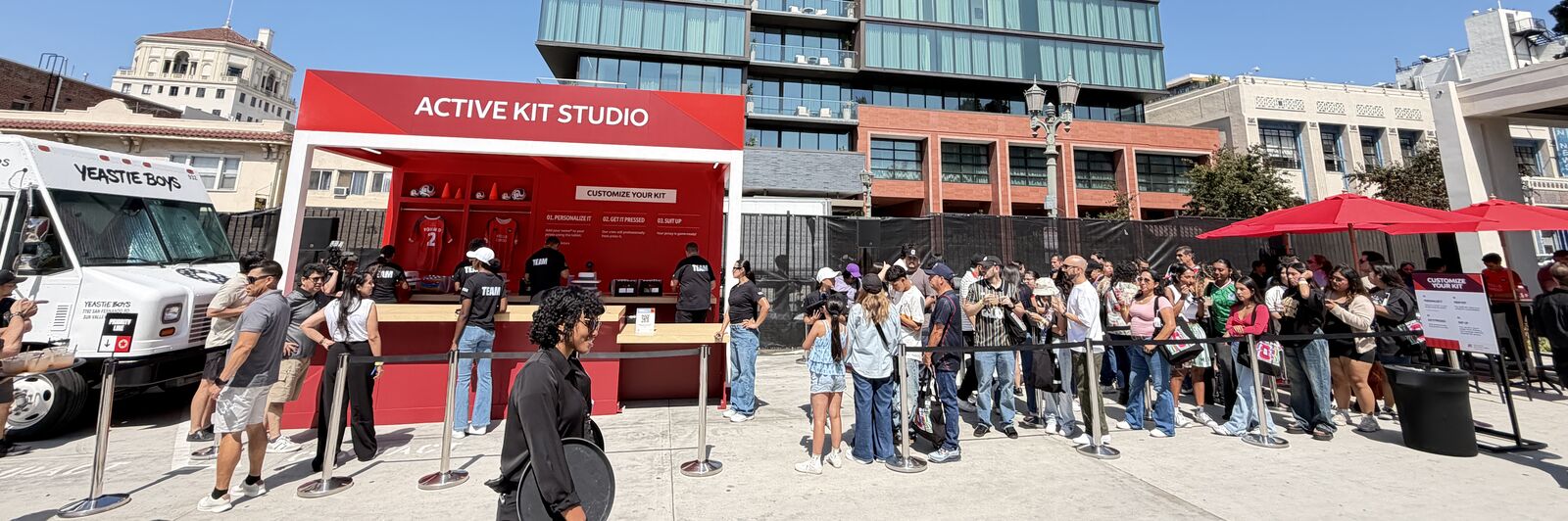
What you are actually putting on the run sheet
The deliverableA guest moment, timed
A guest steps up, enters a name and a number on a tablet, and watches a crew member press it onto a jersey. They walk away wearing it, still warm. It reads on camera, it photographs well, and it does not require anyone to explain it.
A takeaway with a name on it
Generic swag gets left on the chair. A jersey with someone's own name across the back does not. That is the entire argument for the spend, and it is the reason the item survives past the event weekend.
A vendor who shows up early
Load-in, table dressing, power drop, waste plan, a crew in matching shirts, and a teardown that leaves your floor clean. The station is only half the job; the other half is not becoming your problem at 6am.
Throughput, so you can size the queue before you sign
Planning mathThe single question that decides whether the station is a hit or a complaint line is simple: can it clear the guests you are sending at it, inside the window you are giving it? Work it backwards.
A lane is one press plus one operator. Events commonly run two to four lanes, and larger activations scale past that. Intake runs off a tablet: every guest's entry becomes a numbered ticket, and tickets get distributed to whichever lane has the least pending work. That is why a busy station keeps moving instead of stacking up behind one slow press.
- One lane1 press + 1 operator
- Typical event build2–4 lanes
- Guest sizes offeredAdult XS–3XL
- Name length in practice~9 characters
- Numbers1–3 digits
If your guest count is bigger than one station can absorb, the fix is lanes and hours, not optimism. We would rather quote you a third lane than watch the line stall during the only hour your sponsor is on site.
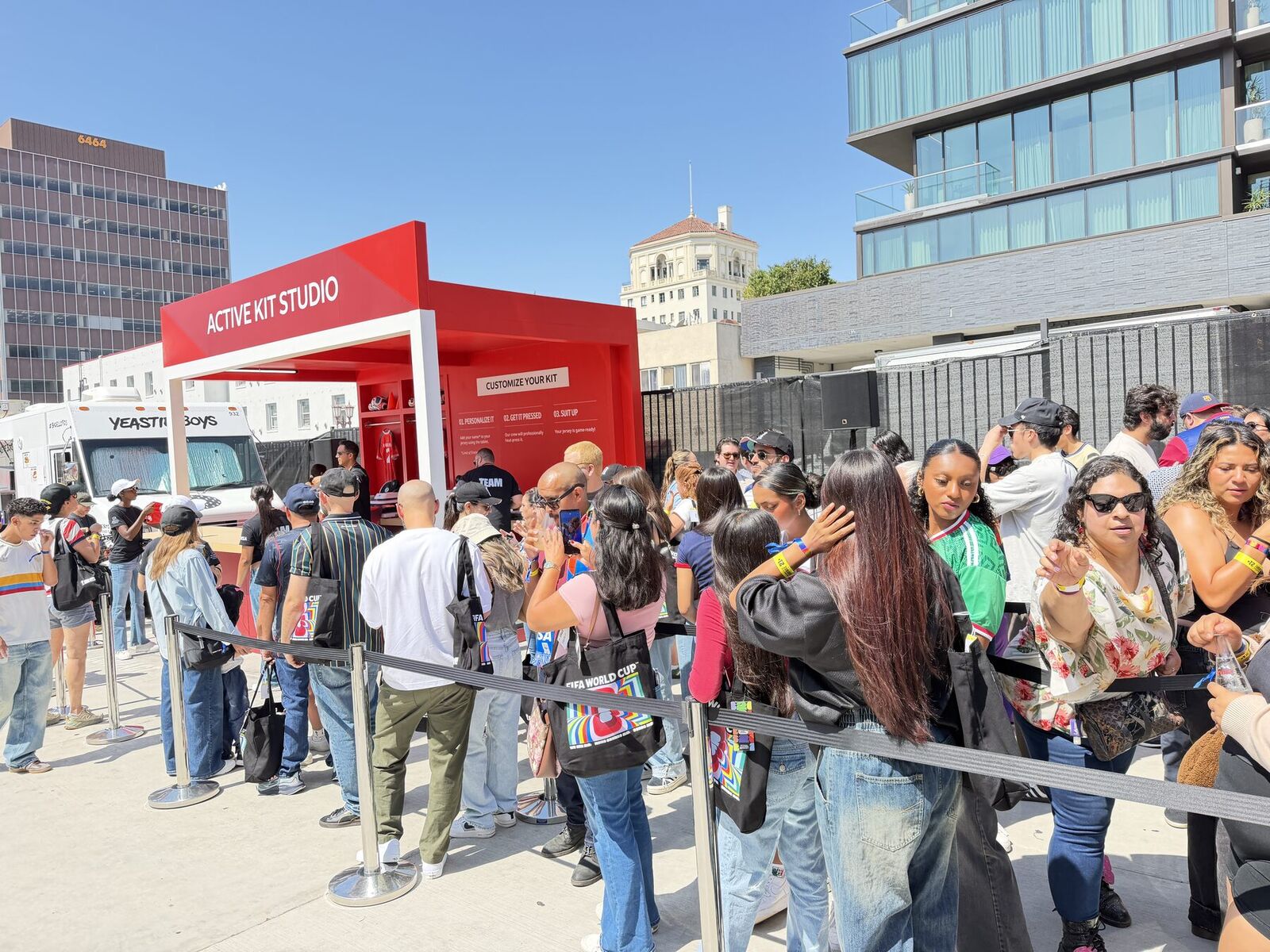
The four things your venue contact will ask you
Footprint & powerFootprint
A working two-lane build wants roughly a 10×10 area with room behind the tables for the crew and stock. Give us the queue direction and we will orient the counter so the line does not cut your traffic flow.
Circuits
Heat presses pull real current. Tell your venue you need dedicated standard circuits near the footprint, not a shared strip off a coffee station. We confirm the count in writing during scoping.
Surfaces
Two six-foot tables per lane covers press, staging and handoff, plus a separate intake surface for tablets. If the venue supplies them, that is one less rental line on your budget.
Load-in
Build takes a couple of hours before doors, teardown less. Book the dock window and the freight elevator with that in mind, and flag any union or badging rules early.
Where a jersey station earns its budget
Event types- ACorporate watch partiesKit everyone out before kickoff so the room photographs as one group.
- BSponsor activationsDwell time, opt-ins and a logo that leaves the footprint on someone's back.
- CTournaments & league daysRosters, client-supplied kits and back-to-back team turnarounds.
- DConferences & trade showsA booth draw that holds a crowd without a raffle or a spin wheel.
- EEmployee appreciation & team buildingInternal days and offsites, where the headcount is known and the take rate is high.
New here? Start with how far ahead to book, then the questions to ask any vendor before you commit.
Send the brief, get a real scope back
QuoteTell us the date, the guest count and the window. We will come back with lanes, staffing hours, blanks, art prep and travel broken out so you can defend the number internally.
- Staffed stations from~$5,000 local
- Staffing$250/hr
- Travel$0 local · $900 beyond OC/LA/SD
- Most corporate events land$25–$40 per guest
Prefer to talk it through? Call (562) 614-4800 or email contact@merchtroop.com. If jerseys turn out to be the wrong garment for your crowd, we will say so — the same crew runs tees, caps, patches, embroidery and engraving.