Build the number from the bottom
ConstructionA defensible budget line is not one figure, it is five. Presented separately, each one is arguable on its merits; presented as a lump sum, the whole thing looks like a vendor's opinion.
- Crew hours × $250including build and teardown
- Garmentsunit cost × realistic take
- Application & consumablesper unit
- Art preparationone-off
- Travel$0 local · $900 beyond OC/LA/SD
Cross-check the total two ways. Against the floor: staffed local stations start around $5,000. And against the per-guest band: most corporate events land at $25–$40 all-in. If your build sits well outside both, something in the assumptions is wrong and it is better to find out now.
The hours people forget
Where budgets breakNearly every budget overrun on this kind of station traces to the same mistake: costing the guest-facing window instead of the crew day.
A three-hour evening reception looks like three hours of staffing. It is not. Add roughly two hours of build before doors and a shorter teardown after, and you are at five or six. At $250 an hour that gap is not a rounding error, and discovering it at invoice stage damages a vendor relationship that did nothing wrong.
Two related items sit in the same blind spot. Venue power charges are yours, not ours, and at convention centres they are materially cheaper ordered in advance than added on site. Table rental is yours too, unless the venue includes tables or we bring them — worth confirming which, because it is roughly two six-foot tables per lane plus an intake surface.
Put all three on the budget from the first draft. A line you predicted is a cost; a line you did not is a problem.
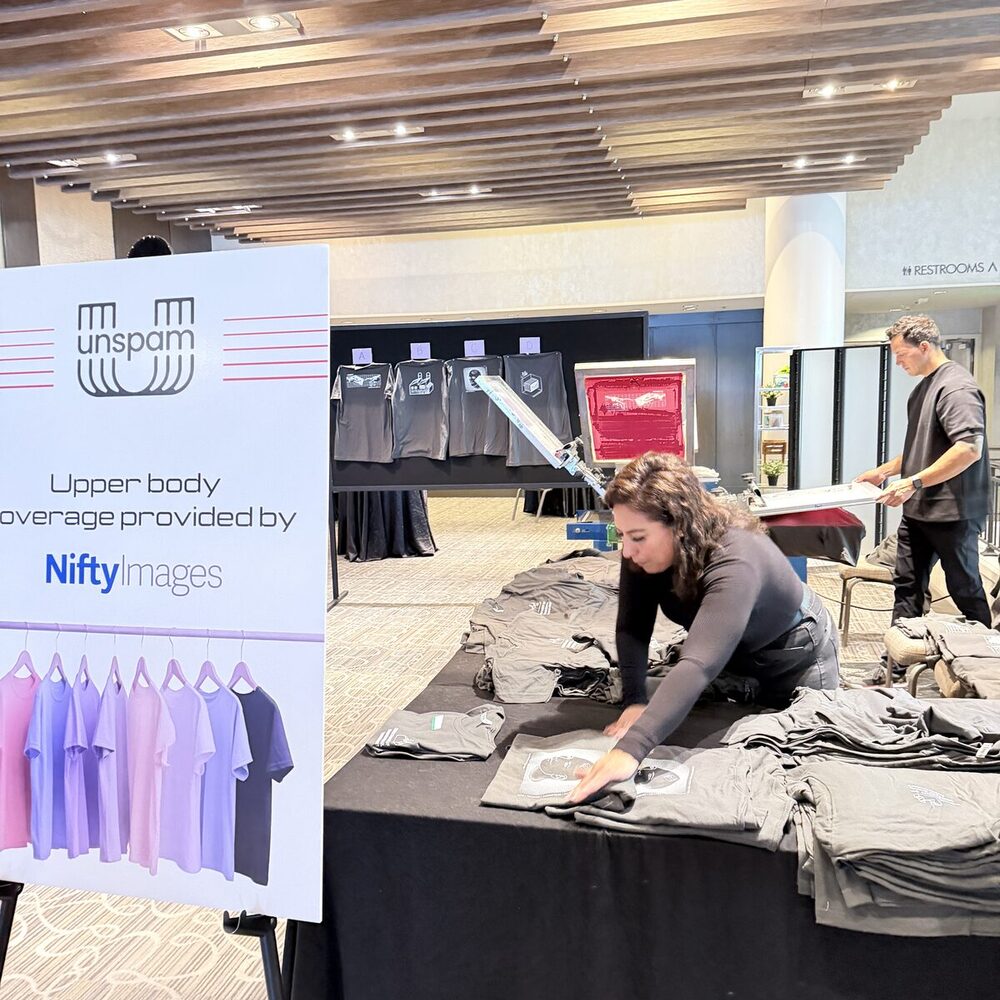
When finance trims it
What to protectBudgets get cut. The question is which lines absorb it.
Protect lane count. This is the one that shows. An under-laned station produces the only complaint guests actually voice, and it turns a positive moment into a queue people abandon. Cutting a lane to save a few hundred dollars can waste the entire remaining spend.
Protect the crew day. Trying to compress build time does not save money, it just moves the risk onto the morning of your event.
Cut hours instead. A shorter, fully-laned window outperforms a long, thin one on both cost and experience. Concentrating the activity also makes the station look busy, which is its own benefit.
Cut the garment, not the format. If the objective is a personalized takeaway rather than a jersey specifically, a tee or a cap with a pressed patch achieves it for less per unit and moves faster through a lane.
Supply your own kit. The largest available saving, and frequently free if your organisation already owns stock.
What not to do: keep every element and quietly reduce the blank order. You will run out mid-event, and the guests who queued and got nothing will remember that far longer than the ones who got a jersey.